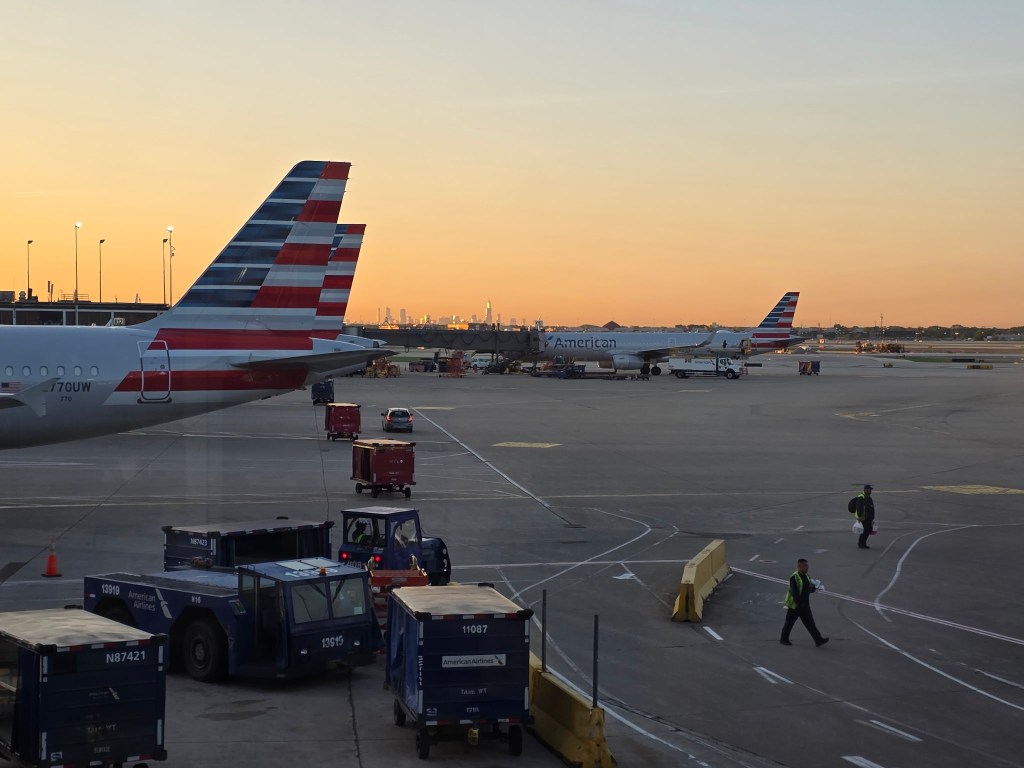
CHICAGO — If you’ve been watching the news lately, you’re probably well aware of the ongoing war involving Iran — and you’ve probably noticed that the price of just about everything seems to be going up.
Now, with Thanksgiving a little more than two months away, families may be asking another question: What will all of this mean for holiday travel?
The effects are already noticeable at the gas pump. As of Sept. 14, the national average for a gallon of regular unleaded gasoline was about $4.32, according to AAA. That’s up from about $4.15 a week ago and $3.18 a year ago. AAA has attributed recent increases in part to rising crude oil prices and continued volatility surrounding the Strait of Hormuz.
And airlines aren’t immune to those higher fuel costs.
Just a day earlier, Avelo Airlines founder and CEO Andrew Levy told Fox Business that fuel prices had returned to “uncomfortably high” levels and said the airline would ultimately have to pass at least some of those increased costs on to customers. Levy said higher fuel prices tied to the conflict in Iran are among the latest challenges facing the airline industry.
With that reality still sinking in, I found myself asking a question that many travelers may be wondering right now: Will it still be cost-effective to travel during the holidays?
My annual trip to New York may cost a little more
Typically, I like to spend Black Friday weekend in New York City. It’s become a bit of a tradition for me — head into the city, enjoy the holiday atmosphere, and do some light shopping at Macy’s flagship store on 34th Street.
So, naturally, I started pricing flights.
As of Sept. 14, non-basic economy fares for Friday, Nov. 27, from Chicago O’Hare International Airport to the three major New York City-area airports were hovering around $160 one way.
Not terrible.
Coming home is another story.
For Sunday, Nov. 29 — the Sunday after Thanksgiving and historically one of the busiest travel days of the year — I found one-way fares exceeding $400.
A United Airlines nonstop flight from LaGuardia Airport to O’Hare was selling for $418 one way. Several American Airlines flights were even higher at $434.
Put the outbound and return flights together, and you’re looking at nearly $600 before factoring in a hotel, meals, transportation, shopping, or anything else you plan to do once you arrive.
Suddenly, that Black Friday weekend getaway doesn’t look quite as inexpensive.
It’s not just the flights I’m searching
Unfortunately, there’s evidence that what I’m seeing isn’t limited to New York-to-Chicago airfare.
The Points Guy reported Sept. 2 that data from its partner Points Path showed cash fares for Thanksgiving searches running 9% to 13% higher than a year ago in recent weeks. Christmas fares were running 12% to 18% higher, while international holiday fares were up 16%.
The travel website typically recommends booking domestic flights one to two months in advance. But it says 2026 is different, citing elevated jet fuel prices, higher airfare than last year, and uncertainty surrounding the conflict in Iran. Its advice for holiday travelers this year is essentially: don’t wait too long.
Another recent Points Guy analysis was even more specific. Looking at last year’s Thanksgiving pricing trends, the publication found fares rose each month beginning in July, with the sharpest increase occurring around mid-September.
That doesn’t necessarily mean you should panic and buy a $500 ticket tonight. But it does mean travelers may want to start paying attention now.
So, how can you save?
First, be flexible if you can. Sunday after Thanksgiving is popular for an obvious reason: Most people need to return to work or school on Monday. If your schedule allows you to come home Saturday, Monday, or Tuesday instead, it’s worth comparing those fares.
The Points Guy notes that historical Google Flights data show Monday-through-Wednesday departures are about 13% cheaper than weekend flights. The publication also recommends considering early-morning or late-night departures, alternative airports, and even traveling on the holiday itself.
Second, set a price alert. Google Flights allows travelers to track a route and receive notifications when prices change. Rather than checking the same itinerary every morning, let the technology do some of the work.
Third, don’t forget about points and miles. A $400 cash ticket might make an award redemption more attractive, although travelers should still compare the value they’re getting before emptying their mileage accounts.
And finally, consider whether flying is even necessary. For regional destinations, Amtrak, driving, or taking a bus may make more financial sense — especially for families purchasing three or four airline tickets.
Don’t let the holidays wreck your budget
I love traveling. Anyone who knows me or reads this blog regularly probably knows that by now.
But there’s also a point where the numbers have to make sense.
With fuel prices elevated, airfare already running above last year’s levels, and considerable uncertainty about what the next few months will bring, this may not be the year to wait until the last minute and hope for a miracle fare.
At the same time, I don’t believe anyone should put themselves in a financial bind just because the calendar says it’s time to travel.
Set a budget. Track your flights. Compare dates and airports. Use points if the redemption makes sense. And if you find a fare that you’re comfortable paying and that fits within your budget, it may be worth booking it and moving on.
The holidays are supposed to be about spending time with the people we care about — not spending January worrying about how we’re going to pay off what we charged in November and December.
Travel if it makes sense. Stay home if it doesn’t.
The memories are important, but so is your financial peace of mind.






 Let's Take a Day Trip
Leave a comment